

What's Driving Small Business Expenses Higher in 2026
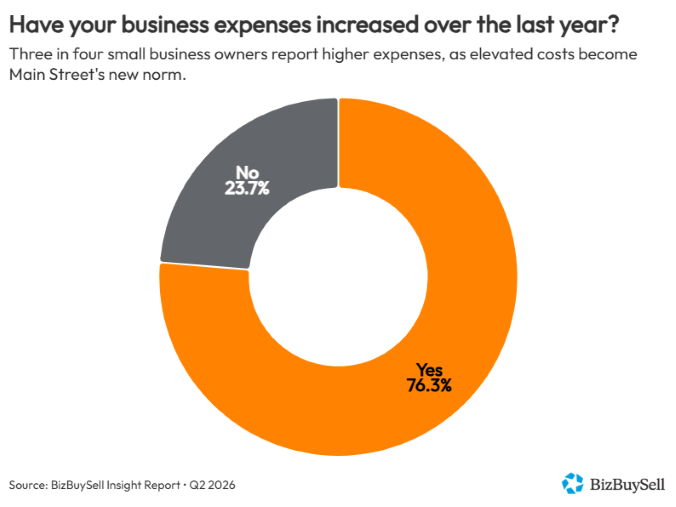
Rising operating costs remain one of the biggest challenges facing small-business owners in 2026. According to BizBuySell’s Q2 2026 Insight Report, 76.3% of business owners reported higher expenses over the past year, with increases spanning everything from inventory and energy to insurance and payroll.
Despite those pressures, many businesses continue to adapt. Forty-two percent of owners said business conditions are improving, while 33% reported no significant change. The findings suggest that while higher costs remain a concern, many owners are finding ways to manage expenses and maintain performance.
For buyers and sellers, understanding where costs are rising and how businesses are responding offers useful perspective when weighing opportunities in today’s market.
What’s Driving Costs Higher
When asked which expenses increased over the past year, business owners most frequently cited the cost of goods (66.6%), followed by fuel and energy costs (57.5%), and insurance expenses (49.9%). Payroll, rent, and marketing costs were also commonly identified as areas of rising spend.
The findings highlight the broad range of cost pressures affecting small businesses. Some owners pointed to higher supplier prices and increased transportation costs as key drivers of rising expenses. One summed it up simply: “Shipping costs have increased due to the cost of fuel.” Others cited higher utility bills, insurance premiums, and labor-related costs that have become more difficult to absorb over time.
While the sources of cost increases vary by business and industry, the overall trend is clear: many owners are managing higher operating expenses across multiple areas of their business simultaneously. For buyers evaluating acquisition opportunities, understanding which costs have risen and how those increases have affected profitability deserves a close look during due diligence, since it reveals how much of a business’s margin is structural versus temporary.
How Energy Costs Are Affecting Small Businesses
Energy expenses remain a meaningful concern for many small business owners. In the Q2 2026 Insight Report, 51% of respondents said rising fuel, heating, cooling, and electricity costs had a moderate or severe impact on profitability over the previous three months.
Owner feedback suggests these costs are affecting businesses in different ways. Some reported higher transportation and fuel expenses, while others cited increases in utility costs needed to operate their facilities. One owner reported, “Our energy bill has doubled,” while another described utilities climbing “for the third year in a row.”
For business buyers, energy-related expenses can be an important part of evaluating operating performance. Reviewing utility, fuel, and facility costs alongside revenue trends can help provide a clearer picture of a business’s long-term profitability and potential opportunities for efficiency improvements.
More Owners Turn to Reserves to Cover Costs
As operating costs continue to rise, many owners are taking steps to maintain cash flow and support day-to-day operations. According to the most recent Insight Report survey, 50.5% of business owners said they have used personal savings, retirement funds, or business reserves to help cover operating expenses over the past year.
Owner responses suggest that approaches vary depending on the business’s financial position and industry. While some reported drawing from reserves to manage short-term cost increases, others highlighted the challenge of operating with limited financial cushions after several years of rising expenses. One owner shared, “Using retirement funds to cover operating expenses.” And another reported: “We have no reserves at this point.”
Many owners are also making operational adjustments to protect profitability. In fact, 34% said they have considered offering discounts on products or services in response to changing customer demand and broader economic pressures. These findings underscore the importance of managing both expenses and revenue strategies in a changing business environment.
For buyers, reserve levels, cash flow trends, and working capital needs can provide valuable insight into a business’s financial resilience. For sellers, a clear record of steady operations and disciplined cash management can help reassure prospective buyers and support a smoother sale.
What It Means for Buyers and Sellers
Rising expenses continue to shape the small business landscape, but many owners are finding ways to adapt. From higher costs for goods and energy to increased insurance and labor expenses, businesses are navigating a wide range of operating challenges while continuing to pursue growth.
Ultimately, a business’s cost structure is central to its long-term performance and profitability. Reviewing trends in expenses such as inventory, utilities, insurance, and payroll can make a real difference during due diligence.
For sellers, demonstrating how the business has managed rising costs, maintained profitability, or improved operations can help build buyer confidence. As operating expenses remain an important consideration across industries, a clear understanding of financial performance can help both buyers and sellers make more informed decisions. As the Insight Report continues to show, resourcefulness remains Main Street’s steadiest asset.